What Is Words On A Page

Words On A Page is a blog dedicated to analysing films old and new. We look at the story, the characters, the action, and everything else that defines a film.

We aim to show that the foundation of every film is the script- The "Words On A Page" that give this blog its name. In doing this, we aim to encourage aspiring screenwriters to look at both the strengths and weaknesses of films that they see, and apply the lessons learnt to their own scripts
Showing posts with label Drama. Show all posts

Monday, 16 February 2015

5 Screenwriting Lessons – Little Miss Sunshine


Who Wrote It?

Little Miss Sunshine was written by Michael Arndt.

How Long Is It?

Little Miss Sunshine is 101 minutes long, including credits.

What’s It About?

Little Miss Sunshine follows the Hoovers, a dysfunctional family who live in Albuquerque. They consist of harried mother Sheryl (played by Toni Collette), Richard, her husband, an unsuccessful self-help teacher (played by Greg Kinnear), drug addicted grandpa Edwin (played by Alan Arkin), uncle Frank (played by Steve Carell), a gay scholar recovering from a recent suicide attempt, teenage son Dwayne (played by Paul Dano), who is taking a vow of silence, and daughter Olive (played by Abigail Breslin), a perky seven year-old obsessed with beauty pageants. When Olive gets a last-minute invitation to compete at the Little Miss Sunshine beauty pageant, which will be held in California, the Hoover family have two days to get to the venue in a derelict VW camper van, and their journey proves to be highly eventful.

5 Screenwriting Lessons – Little Miss Sunshine
(The Following May Contain Spoilers)

Journeys Are Vital to Character Growth – The main focus of Little Miss Sunshine is the Hoovers’ realisation that they will have to work together in order to fulfil Olive’s dreams. Out of all the family members, this challenge is hardest for Dwayne. His dislike of his family is expressed clearly and effectively when Frank tries to start a conversation with him at the dinner table. When Frank asks Dwayne if he has any friends, Dwayne writes “I hate everyone” and underlines his comment when Frank mentions the rest of the family. His strained relationship with them is severely tested when he finds out that he’s colorblind and will never be able to fulfil his dream of being a pilot. This causes him to have a breakdown, during which he ends his vow of silence and viciously attacks his family. However, when Olive decides to go and comfort him, Dwayne realises how much she appreciates him, and re-joins the family, allowing them to get to their destination in time. Dwayne’s acceptance of Olive’s dream demonstrates that he has become a more selfless character, as her goals now matter more to him than his failures.

Another member of the family who tries to deal with unattainable dreams is Richard. When he finds out that his agent, Stan Grossman, has failed to land the deal that would get his book published, he steals a motorbike and drives to the hotel where Stan is staying to confront him personally. Once there, Richard responds angrily to Stan’s comments about his inability to sell as an author, and announces that he is dissolving their partnership. During this sequence, Richard’s assertive nature, which has previously been a hindrance in his relationship with others, is given a more positive use, as he states that will not let others define him and the manner in which he pursues his dreams. Dwayne and Richard are both forced to realise that the effort they put into attaining their goals was futile, and a longer-lasting and more reliable source of happiness can be found by supporting their family.

Give Characters Shades of Grey – No matter how colourful and distinctive a character is, they need to be depicted with enough nuance to seem realistic. The characterisation of Edwin provides a good example of a memorable but seemingly one-note character who is portrayed with increasing complexity the longer we get to know him. Initially, Edwin appears to be little more than a vulgar and immature grandparent. In the car, Edwin gives Dwayne a talk in which he provides very inappropriate advice, telling him to start having sex as quickly and often as possible, in a speech full of profane language. However, when he interacts with Olive, we see another side to him, as he assures her that she is “beautiful inside and out”, and tells her not to worry about failing, as the real losers are those that do not try. The contrast between Edwin’s crass and offensive behaviour towards the male members of the Hoover family and his caring treatment of Olive develops his character, as the seeming contradictions between the two sides of his personality demonstrate that he is not a completely stereotypical character. This makes him seem more rounded and interesting to watch.

Olive is another character with an important personality trait that is gradually established throughout the course of the movie. In spite of the enthusiasm with which she pursues her dreams of being a beauty queen, Olive’s insecurity is her defining flaw. When the family have breakfast at a diner, Richard tells her that the ice cream that she has ordered can make her fat, causing her to feel uncomfortable. At the pageant, Olive meets one of her favourite beauty queens, Miss California, who says that she eats ice cream frequently as well. This highlights one of the main problems with beauty pageants, as Olive feels like she has to conform to an established image in order to compete. Miss California’s comments demonstrate that it is unnecessary for Olive to forbid herself from enjoying the things she loves, and this foreshadows the primary message of the climax, that Olive doesn't need to follow the conventions of beauty pageants, and, like the other members of the Hoover family, is happiest being herself.  

Establish Personalities Effectively – The Hoover family are introduced in an opening sequence that establishes their quirks and flaws. Olive is watching a video of an old beauty pageant, Richard is giving a lecture to a near-empty classroom, Edwin is taking heroin in the bathroom, and Sheryl is arguing over the phone, denying the fact that she is smoking in the car. This extract sets up the various obstacles that the family face in their daily life. Whilst it establishes their unusual nature, it also demonstrates that their problems are typical enough for them to seem like realistic and relatable characters.

The emphasis on the Hoovers’ distinct personalities is a pivotal part of the first act, especially when they sit together at the dinner table for the first time. The primary sources of conflict in the scene are Frank’s reluctance to reveal the issues that led to his suicide attempt and Richard’s belief that Frank’s actions render him a failure. Their primary character flaws, namely Frank’s inability to get over his depression and Richard’s refusal to accept the perceived weaknesses of others, are fully displayed in this scene, and the presence of the rest of the family provides an extra level of tension, as they notice these failings as well. This means that both Richard and Frank have to face up to their negative traits in order to gain the respect of those around them. Generally, the first act is focused on setting up the dysfunctions and flaws that define the Hoover family, whilst making them appealing enough for the viewer to want them to overcome these issues.

Hypocrisy is Key to Comedy – Comedy is heavily based on the contrast between an expected outcome and an unexpected one, and this incongruity can often be highlighted through characters who say one thing and do another. The best example of this in Little Miss Sunshine occurs during the climactic beauty pageant. The various girls who participate are dressed in a manner that is highly inappropriate for their age, with several wearing bikinis. When Olive performs the routine that Edwin created for her, it turns out to be a burlesque-style striptease. The pageant organisers are horrified by this, and attempt to remove Olive from the stage. The contrast between their acceptance of the earlier performances and their reaction to Olive’s dancing suggests that they regard the latter as extreme and unusual, but the viewer is made aware of the fact that the difference between Olive and her competitors is not as significant as it seems to the people running the pageant. This narrow gap, and the inability of the pageant judges to notice it, highlights how unreliable their opinions are, and suggests that the sexualisation of child performers is inherently problematic.

Tight Time Frames Increase Tension –The Hoover family have just two days to make the 800-mile journey from Albuquerque to California, and they have to deal with problems that make an already-difficult task seem impossible.  When Richard breaks the clutch, the mechanic he consults claims that replacement parts will not arrive until the following week. The Hoovers soon find a solution to this problem, as they are told that they can get the car moving by pushing it until the engine starts, then jumping into the vehicle. This dangerous strategy establishes that the Hoovers are willing to take any risks to get to California. More importantly, it provides effective symbolism for the changes that they will have to undergo on their journey. In order to achieve their external goal (reaching the beauty pageant) and their internal desire (repairing the rifts between the various family members), the Hoovers will have to work together to keep the VW van – and their relationship – on track.

The problems with the car seem insignificant later on, as the Hoovers face a number of problems that would usually spell the end to a road trip like theirs. At the midway point of the film, Edwin dies of a drug overdose. However, realising how much seeing Olive at the pageant would have meant to him, the family continue on their journey anyway. When they are told that they cannot transport Edwin’s body until funeral arrangements have been made, they steal it from the hospital and hide it in the trunk of their car until they reach their destination. Their readiness to carry out such a risky action highlights how desperate they are to get to the beauty pageant, and establishes that their journey is no longer solely for Olive’s sake – it matters just as much for the rest of the family. This shift in motivation proves that the Hoover family understand each other better, and this would not have happened were it not for the time spent on the journey so far, and the difficulties they have faced together.

Conclusion

Little Miss Sunshine proved to be successful both critically and financially because of its engaging and developed characters and ability at dealing with dark issues, such as suicide, depression and child exploitation, whilst keeping a generally upbeat tone throughout. The Hoovers are relatable characters whose growth during the movie is entirely believable, and the story is both familiar and unusual. The blend of the conventional and the unique allows Little Miss Sunshine to appeal to both viewers who want something that is fun to watch, and those who are interested in more challenging fare. This is the main reason why the film was popular on release and remains well-regarded today.

Monday, 15 December 2014

5 Screenwriting Lessons – Croupier

Who Wrote It?

Croupier was written by Paul Mayersberg.

How Long is It?

Croupier is 94 minutes long, including credits.

What’s It About?

Croupier follows Jack Manfred (Played by Clive Owen), an aspiring writer seeking to create a successful novel. On the advice of his father, he gets a job as a croupier in a seedy London casino. His experiences provide him with plenty of material, but his relationship with his girlfriend Marion (Played by Gina McKee) comes under strain. Furthermore, Jack gets involved in affairs with two women: the cynical dealer Bella (Played by Kate Hardie), and the mysterious Jani (Played by Alex Kingston), thus violating one of the central rules of the casino – Never talk to the other croupiers or the players.

5 Screenwriting Lessons – Croupier
(The Following May Contain Spoilers)

Get into the Protagonist’s Head – One of the most important aspects of the film is Jack’s Voice-over, which he provides in the third person, as if he were narrating his own story. This serves two purposes. First of all, it sets up Jack’s obsession with writing, as he is aiming to make his narrative seem as dramatic as possible. This sets up the theme of duplicity, as he is hiding his knowledge and observations from the unsuspecting gamblers at the table. Because of this, the audience is left wondering how many secrets Jack conceals, and how relevant these will be to the story. Furthermore, the use of Voice-over also makes the viewer interested in seeing what happens to him. Jack is an aloof character, and needs to be depicted in an accessible manner in order to be worth following. By allowing him a way to communicate with the audience in a manner that retains his introverted personality, but permits an insight into how he really feels, the script succeeds in doing this.

Jack’s desire to craft an appealing narrative is consistent throughout the story. At a party with Jani and his publisher, he offers to deal the cards in a round of poker, and gives everyone an increasingly impressive hand, with Jani winning. From this, it is possible to sense the fact that he has feelings for her, but also that he is interested in the world of the casino because he the thrill of watching the gamblers blow a fortune far more fascinating than anything his publisher wants him to write. This fascination with victory and defeat is the main motivation for his actions at the party. Although Jack ditches the stifling world of publishing in favour of his job on the casino floor at the end of the movie, he retains his fascination with observing the world around him. The fact that Jack is defined by this very common and interesting trait allows him to be a compelling anti-hero.

Simple Things Can be Very Interesting – In the third act, Jack gets himself implicated in a robbery by Jani. She offers to pay him if he provides a distraction on the casino floor. All he needs to do is call out a cheater at his table, which he had done earlier in the movie. The fact that the entire robbery hinges on something that Jack normally does without hesitation increases suspense because the plan is too perfect; it involves attaining large rewards with very little effort. If such a routine action has such significant consequences, then the audience can expect the possibility that something must go wrong. The inevitability that their suspicions will be proven correct encourages them to keep watching, as they want to know what will happen to prevent the plan from working.

Give Characters Unique Personalities – Croupier contains three distinctive female characters, Marion, Bella and Jani. All of them have their personalities developed in a simple and effective manner. Marion is introduced via Voice-over with classical music playing in the background, Bella is first seen undressing in a mirror behind Jack, and Jani is a particularly alluring customer at the tables, standing out due to her expensive look and her confident behaviour. As a result of these vivid and contrasting quirks, this group of characters manage to seem unique and developed in spite of the film’s short runtime.

Jack’s father is also introduced in a manner that conveys his mischievous personality. Whilst Jack is struggling for inspiration, he receives a call from his father recommending that he gets a job at a casino. Jack Sr.’s fast and energetic tone contrasts sharply with Jack’s slow and deliberate style of speaking. The viewer can sense that they are in some sort of conflict, as the two are very different in spite of their family relationship. This generates a number of interesting questions. How did Jack and his father drift so far apart, and will there will be any developments that provide further insight into them? The desire to see these questions answered entices the audience to continue watching.

The Audience Should Be Allowed to Observe Things with the Characters–Initially, Jack is unwilling to take up his father’s job offer, but over the course of the film, he gains an increasing affinity for the world of the casino. His natural ability to function in the casino environment is set up in his first scene there, in which he demonstrates his skills as a croupier. Instantly, he observes that the casino is not replacing chips as often as it should, and passes a test of his dealing skills with flying colours. This shows that he understands the basics of gambling better than the people in charge, and this advantage generates both inspiration for his story and the increasing addiction to the atmosphere of the casino.

Little details can serve to develop characters, but they can also generate suspense. Jani reveals the robbery to Jack in a lavish party in a country house. When she takes him, she has her arm in a cast, and tells Jack that it is because she owes a debt to some mysterious enemies, providing an effective pretext to get Jack involved. The next time we see Jani, her injury has healed. However, a bad bruise which Jack gained in a brawl with a disgruntled gambler remains. The viewer can figure out that Jani was faking her injuries and cannot be trusted. This sets up the intriguing mystery of what her real motivations are, and the prospect of finding these out drives the climax.

Make Your World Unique – One of the most unique features of Croupier is the fact that it is based in London, as opposed to a more traditional gambling location such as Las Vegas or Atlantic City. This allows it to demonstrate a different approach to the subgenre of gambling-based movies, whilst providing truths about that industry which are equally applicable in all casinos everywhere. The wide variety of London scenery is used throughout the film. Key interactions with Bella and Jani take place in Piccadilly, a particularly affluent area of the city. The juxtaposition of the vast spaces there and the drab, confined casino highlights the artifice inherent in the latter location. It relies on extravagance just as much as the expensive London shops, but the casino and its employees do not have the ability to make this seem natural, and, as a result, the seediness and desperation that the place relies on is emphasised instead of concealed.

There is also substantial focus on the life behind the tables. Given the cold and formal manner in which croupiers are expected to conduct themselves, their behaviour once their shift is over is revealing. Many of the dealers frequent a club ran by one of the customers – a clear violation of the rules established at the start of the film. The casino is required to project an image of efficiency and professionalism, in order to encourage patrons to gamble away as much money as possible, and this forces the employees to hide their true personalities. Jack’s ability at doing this allows him to thrive in the casino environment.

Conclusion

Although often regarded as a Thriller due to its neo-noir style, Croupier is closer to a character-based Drama. In spite of its short runtime, it manages to create a cast of characters who are memorable and engaging in spite of their unsympathetic nature, and its focus on the mundane reality of ordinary casinos is unique, generating a number of fascinating insights. There is also a significant attention to detail, with the most ordinary things being depicted in a manner that can grab the audience’s attention and arouse their curiosity. This means that Croupier is worth a watch, as it proves that even the shortest movies can be complex and elaborate without becoming boring or incoherent.

5 Screenwriting Lessons – The Imitation Game

Who Wrote It?

The Imitation Game was written by Graham Moore, and based on the book Alan Turing: The Enigma, written by Andrew Hodges.

How Long is It?

The Imitation Game is 114 minutes long, including credits.

What’s It About?

The Imitation Game tells the story of Alan Turing (played by Benedict Cumberbatch), a gifted mathematician who gained a job as a codebreaker during the Second World War. Hired to decrypt messages sent by the Germans using the Enigma coding machine, he annoys his superiors with his anti-social manner, but soon comes up with an elaborate machine to crack the Enigma code. The film also deals with Turing’s homosexuality, illegal in Britain during his lifetime, his ill-fated relationship with fellow code breaker Joan Clarke (played by Kiera Knightley), his arrest for “Gross indecency” in 1952, and his eventual suicide.

5 Screenwriting Lessons- The Imitation Game
(The Following May Contain Spoilers)

Use Flashbacks and Flash-forwards – The Imitation Game begins in 1952, with police responding to the break-in that would expose Turing’s sexuality and lead to his arrest. The initial meeting is full of foreshadowing that sets up Turing’s downfall. When the detectives investigating the case first see him, he is cleaning up poisonous chemicals. As well as foreshadowing his suicide, which is not depicted in the film itself, it sets up Turing’s awkward and unsociable nature, which create as many obstacles for him as his homosexuality does. The subsequent interrogation of Turing provides a framing device for his narration. The detective conducting it, Detective Nock, serves as a stand-in for the audience, as he listens to the narration and gains an increased understanding of Turing as a person. This technique is used to emphasise the secrecy involved in Turing’s life, as the story he tells was known only to those directly involved at the time. In recent years, the tale has become more familiar, but the depiction of a time when it wasn’t highlights the levels of mystery that defined both Turing and the project in which he was involved.

As well as the scenes set after the war, there are also a number of flashbacks to Turing’s past as a student at a boarding-school. These serve to develop his character in a number of ways. He is implied to have Asperger’s syndrome or a similar condition, which manifests itself in his obsession with separating peas and carrots in his school dinner. This leads to him being mercilessly bullied by a number of fellow students, and sets up the fact that he is a misfit who nobody is able to understand. The flashbacks also depicts his friendship with, and growing attraction towards, Christopher, an older student who introduces him to the world of cryptanalysis. This ensures that he is a more relatable protagonist, and provides motivation for his actions throughout the rest of the film.

If A Line of Dialogue is Significant, Echo It Later - There are a number of instances in the film where a minor detail or exchange is used again later to emphasise its effect. Some of these are comedic in nature. For example, when Turing is hard at work designing his decryption machine, he refuses a request to go out for lunch, claiming that he dislikes sandwiches. Later, one of his fellow codebreakers steals a sandwich from him, citing this earlier comment when doing so. Though the sequence is entirely humorous, it demonstrates that Turing’s colleagues are ambivalent in their opinions of him. They accept his skills, but still regard him as a loner and therefore treat him in a disrespectful manner. This indicates that Turing is yet to fully win the approval of his team, and provides a personal motive for Turing to succeed, in addition to the wider need to save Britain.
However, the majority of echoes in the story are far more direct. One significant line is “Sometimes it is the people no one imagines anything of who do the things no one can imagine.” This is used three times in the movie. It is first used Christopher, then Turing himself, and finally Joan in the last scene. This reflects and reinforces the message of the movie, which is that the Second World War was not won on the battlefield, but by an introverted mathematician who was “agnostic” towards violence. The contrast between Turing’s anonymous nature and his highly valuable contribution is inherently fascinating, and this is at the heart of both the quote and the movie itself.

Protagonists Don’t Have to be Likeable – The film places a significant amount of focus on Alan Turing’s flaws. He was anti-social, overconfident, obtuse and lacking inhibition. These traits are made particularly apparent in his interview with Commander Denniston, the head of Britain’s Government Code and Cipher School, the organisation for which Turing worked. For example, he tells Dennison “You would need me a lot more than I need you.” The purpose of an interview is usually to win over the person conducting it, but Turing’s blunt comments show that he regards himself as being superior to Dennison, which is hardly an endearing statement to make in such a serious context. However, because Turing’s judgements turned out to be correct, the audience are on his side, because they are aware that he will be an essential member of the team and hope Denniston will recognise this. Turing’s confidence in his abilities make him a compelling character, and this ensures that the audience more inclined to follow him and see what effects his positive and negative characteristics have on his success.

Use the Period – The majority of the film takes place during the Second World War, and this creates a significant degree of tension. The extent of the threat posed by the Germans and their apparent invulnerability makes Turing and the codebreakers seem like underdogs, and this is highlighted through the menacing depiction of German ships and planes advancing on their enemies. Furthermore, they represented a more immediate threat through “The Blitz”, their bombing campaign against British cities. The attacks are depicted in a quick montage which focuses on the effect that they had on the ordinary British public. This conveys how destructive the conflict was and raises the stakes – If Turing and his team don’t succeed, Britain might be destroyed. Due to the distance between the codebreakers, based in the country estate Bletchley Park, and the battlefields on which the war was fought, the decision to show the impact of the fighting on those directly involved creates an increased sense of urgency, and this is what forces the team at Bletchley Park to work together in order to find the secret behind the Enigma machine as quickly as they can.

The German’s apparent dominance soon becomes an advantage for Turing, but this generates an ethical dilemma. After he succeeds in cracking the Enigma machine, the British now have a complete understanding of German strategy throughout the world. However, Turing realises that if this advantage is revealed, it would undo all the progress he has made. Therefore, he chooses not to warn the British government about an impending attack on a ship.  Even though one of his fellow codebreakers has a brother on board the doomed vessel, Turing stands by his decision. Although this is a pretty unlikely coincidence, it does highlight the effects that concealing all knowledge of German activities had. Because the depiction of the code breaking process omits almost all developments after Turing’s breakthrough, the story needs to find another way of demonstrating the obstacles the codebreakers faced from this point, and highlighting the problems generated by the newfound insight into German activities provides a striking way of doing this.

Relationships are Key – The story of the Imitation Game is structured around Turing’s relationship with Clarke. The first act ends with Turing inviting her to join the codebreakers at Bletchley Park, his decision to propose to her occurs at the midpoint of the story, and the second act ends with the revelation of his sexuality.  This is important because whilst the cracking of Enigma was a significant event, the majority of the process saw Turing use skills that he already possessed, namely his tenacity and mathematical knowledge. In contrast, his relationship with Joan forces him to change as a character and develop a close relationship with another person – his inability to do so is at the centre of his personality. This growth not only makes him into a more developed character, it enables him to enjoy greater success. For all his prowess as a mathematician, it is being able to listen to others provides Turing with the information needed to solve the German code.  Biographical dramas can risk emphasising facts over character, and by focusing on Turing’s inability to interact with his team, the script creates a story that can be applied to any time or place, but is enhanced by the people and events involved.

Verdict

The Imitation Game succeeds as a biopic because it focuses on characters instead of events. The Second World War is kept firmly in the background, and the focus in in Alan Turing himself. He is a highly flawed character, but has enough relatable traits to make him a protagonist worth rooting for. The period is well depicted, and the flashbacks and flash forwards are incorporated into the story effectively. The dialogue is strong, and in spite of the lack of action, the various conflicts Turing and other characters face are engaging. The screenplay provides a solid foundation for a talented cast and crew, and this is the main reason why the film is a prominent contender in this years’ awards season.

Sunday, 12 October 2014

5 Screenwriting Lessons – Pride


Who Wrote It?

Pride was written by Steven Beresford.

How Long is It?

Pride is 120 minutes long, including credits.

What’s It About?

Pride is based on the true story of the LGSM (Lesbians and Gays Support the Miners) group that operated during the British miners’ strike of 1984-5. It is founded when a group of gay activists, including the young rebel Mark Ashton (Played by Ben Schnetzer) , the flamboyant Johnathan Blake (Played by Dominic West) and the inexperienced Joe (Played by George MacKay), come together during a Gay Pride demonstration and decide to raise money to help the fight the British government’s attempts to close the country’s mines. After numerous failed attempts to find support from the British Union of Mineworkers, the LGSM are allowed to come to the small Welsh mining town of Onllwyn to promote their cause. Once there, they make an impression on the initially reluctant townsfolk, and gain a number of friends, such as Dai (Played by Paddy Constantine) and housewife Sian (Played by Jessica Gunning). However the homophobic attitudes prevalent throughout Britain at the time, coupled with the difficulties that the miners face as their strike progresses, ensure that the LGSM’s cause appears doomed.

5 Screenwriting Lessons – Pride
(The Following May Contain Spoilers)

Every Character Should Stand Out – Pride contains a large cast of characters, all of whom are depicted in a vivid and memorable manner. The initial focus is on the individual members of the LGSM. Joe, who refers to himself as “Bromley” until the climax of the film, is unsure of his sexuality. Mark is a provocative radical, whilst Johnathan’s partner Gethin is more grounded and less flamboyant than other members of the group. All the members are given a number of strengths and weaknesses; for example, Mark is shown to become a bit too self-centred as the LGSM gain prominence.  As a result of this nuanced portrayal, the characters always seem real, enhancing the legitimacy of the story and increasing the viewer’s interest in it.

The diversity of the cast is also showcased in the village of Onllwyn. The inhabitants all have different outlooks and different reactions to their unlikely supporters. Dai is the first person to meet the LGSM, and takes to their approach quickly, giving an introductory speech for them at a gay club in London. Sian is the one who undergoes the strongest character arc, as she transforms from an ordinary housewife into one of the LGSM’s strongest and most helpful supporters. Maureen is the nearest thing to a human antagonist in the story (the main opponents are the background forces of Margret Thatcher’s Conservative government and the institutions that supported it) as she refuses to let go of her homophobia and clings onto her belief that the LGSM are only out for themselves. This wide range of responses from this cast of supporting characters allows the film to reflect the wider views of society at large, acknowledging the fact that those aiming to bring about change, such as the LGSM, will always have to face up to intolerance from individuals, but their ability to open up the minds of the wider community is all that matters.

Portray the Past Effectively – The film begins with stock footage depicting the protests that occurred during the miners’ strike. Miners are depicted engaging in peaceful rebellions and being attacked by the police, and we soon switch from this succinct introduction to scenes depicting the strike on the news as Mark watches. This sets up the main subject of the story, in which the rebellious masses will take on the might of the government. Whilst the strike is merely in the background, as the film zeroes in on a small group of people involved, it serves to mobilise the plot and the protagonists driving it, and is therefore a vital part of the story.

The effects of the miners’ strike also increase our understanding of the characters. The destitution experienced by the strikers and their families is conveyed in a manner that can be remembered by those who experienced it, and understood by the viewers who did not. At the Onllwyn village hall, the main prize in the bingo games is a tin of corned beef. This is usually regarded as a cheap item that few would eat out of choice, but the fact that it is such a valuable prize highlights how desperate the inhabitants are, and how they are trying to make the best of their situation.  The best way of depicting an important event such as the miners’ strike is to depict realistic characters coping with the effects of it in a truthful manner, and Pride succeeds in doing this.

Subplots Are an Integral Part of Any Film – Within the overarching story of the LGSM’s attempts to bring attention to the causes of both the miners and the LGBT community, there are a number of smaller subplots. The most prominent of these concerns Joe, whose conservative parents want him to study in a catering college. However, he actually wants to be a photographer, and struggles to see eye-to-eye with them. Over the course of the film, Joe learns to be more assertive and accept his sexuality, and his parent’s failure to understand this increases his desire to be independent. This struggle with adversity gives the story a human focus, and reflects the main theme of being open about your orientation even in the face of considerable opposition.

The message about being proud of yourself is also apparent in two secondary subplots. The first of these concerns Gethin, who tries to rekindle his relationship with his Christian mother. The other one follows Cliff, a respected member of the Onllwyn community, who eventually reveals that he is gay. In both cases, the characters decisions are accepted by those close to them. In spite of the ultimate failure of the miners’ strike, the overall tone of Pride is a triumphant one, and Gethin and Cliff’s ability to come out reflects this.

Changes in Mood Should Feel Natural – Pride has to balance both comedic and dramatic elements, and does this by contrasting them; an upbeat sequence will be followed by a serious setback that hinders the protagonists. Therefore, the emotional high of acceptance from the community is followed by the reveal that Maureen has told the tabloids about the LGSM’s presence, and the heartwarming scene in which Gethin’s mother comes to visit him in hospital, completing the subplot depicting their reconciliation, is followed by Johnathan’s admission that he is HIV positive. This alternation between increasingly positive and increasingly negative events creates a growing progression, and ensures that, instead of seeming like a constant stream of events, the film flows naturally, with a story that can follow the beats of a conventional screenplay structure perfectly.

The brutal nature of homophobia in the 80’s is summed up by an attack on Gethin that leaves him hospitalised as he goes out on his own to ask for donations. Whilst it is not actually shown, it is foreshadowed skilfully, with the warning that the LGSM members should stay together when trying to collect funds, and the attacks on Gethin’s bookshop earlier in the film. This ensures that when the lighting dims and the score turns ominous, the viewer can figure out what is going to happen without having to see it. As a result, the film is successfully able to depict the reality of homophobic violence without the jarring deviation from its overall tone that would have resulted from actually showing it.

Be Energetic - Pride’s approach and tone is reflected in its soundtrack, which is a mixture of protest songs and up-tempo 80’s pop. However, the music is more than just a way of setting the mood. It becomes particularly important during “Pits and Perverts”, a benefit concert set up by the LGSM in response to vicious articles from the pro-government tabloids. Enlisting the services of the electronic pop act Bronski Beat, they manage to gain large amounts of attention for their cause and money for the people of Onllwyn. This marks a significant milestone in the story, as a group of amateur activists founded only a few months before are able to recruit the services of band who, at the time, were one of the most popular acts in Britain. The ambition of the LGSM highlights their commitment to their twin causes, and shows that they are gaining increasing popularity and prestige as a result of this. Music is an important part of modern life, and the LGSM’s ability to connect with it allows them a simple and appealing way of proving that minority groups can make a difference.

Conclusion

Pride provides a unique perspective on one of the most important events in modern British history. It provides a wide range of characters who are defined clearly enough to stand out, but depicted in a manner that allows them to seem like real people instead of stereotypes. It makes good use of the period in which it is set, embedding the culture of the time into the story seamlessly. Most importantly, it provides large amounts of comedy and drama without letting either dominate the film completely. Generally, Pride is a good example of how two complex genres, the historical drama and the ensemble comedy, can be combined in a manner that is both enjoyable and appealing for a wide audience.

Sunday, 31 August 2014

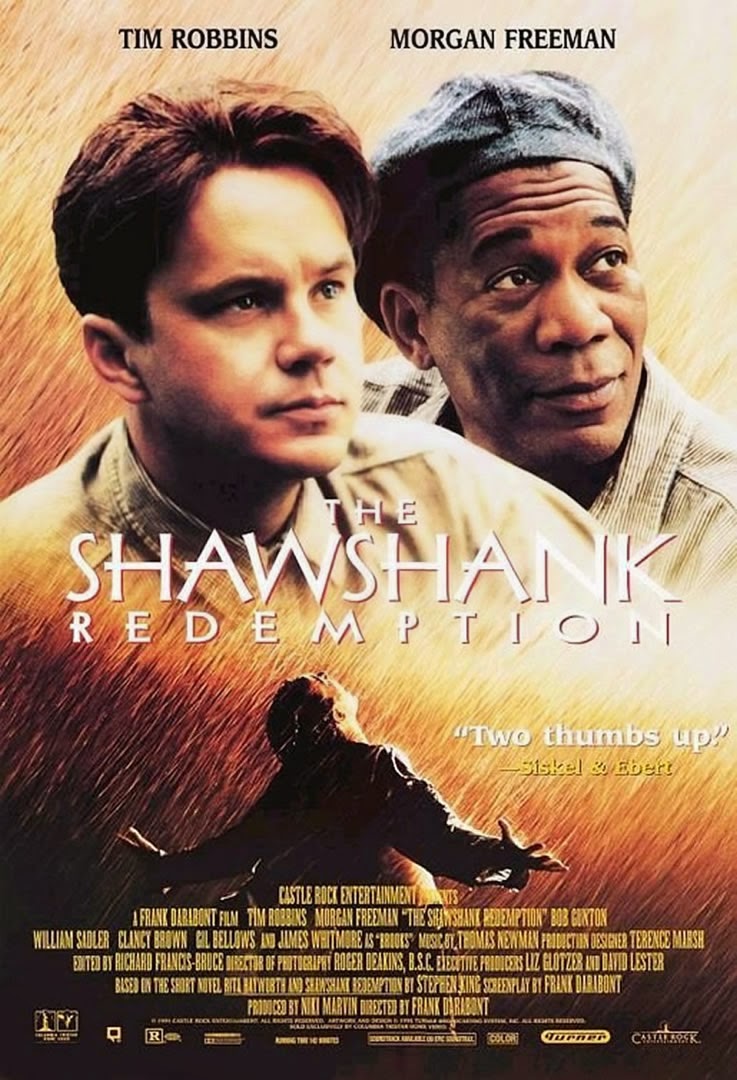
Script to Film – The Shawshank Redemption


It is undoubtedly fascinating to analyse films, but it is just as interesting to look at the screenplays that they were filmed from.  In this feature, we will be looking at how key scenes from a movie are depicted in the original script. Sometimes, the film and script are very similar, but there can also be some substantial differences, especially if the script is an early draft.

For the first “Script to Film” article, we will be looking at The Shawshank Redemption. The script for the film can be accessed below:


Who Wrote It?

The script for The Shawshank Redemption was written by Frank Darabont, who directed the film, and was based on the short story “Rita Haywoth and the Shawshank Redempton” by Stephen King.

How Long Is It?

The Shawshank Redemption is 142 minutes long, including credits.

What’s It About?

The Shawshank Redemption follows Andy Dufresne (Played by Tim Robbins), a banker who is falsely convicted for the murder of his wife and her lover, and sentenced to life without parole in Shawshank Prison.  There, he forms a friendship with fellow prisoner Red (Played by Morgan Freeman). Used as by the corrupt Warden Norton (Played by Bob Gunton) as an assistant to cover up his money laundering, Andy bides his time in prison, never losing hope in the possibility of being free.

Script to Film – The Shawshank Redemption
(The Following May Contain Spoilers)

First Night – The brutality of Shawshank Prison is highlighted in Andy’s first night there, as the long-serving inmates take bets on which of the new prisoners will break down crying. One scene that was in the script but not the film shows various new inmates terrified by their menacing surroundings. Whilst this effectively illustrates how difficult it is adjusting to life in prison, it was felt to be unnecessary. The voices of the various prisoners demonstrate the same effect as they “carry on, sly and creepy in the dark”. This creates an ominous atmosphere, and by showing the prison as a whole instead of focusing on specific inmates, makes the viewer feel like they are inside as well, which emphasises the confined the prisoners at Shawshank are.

The sadistic head guard at Shawshank, Captain Hadley, responds to the breakdown of one anxious, overweight prisoner by viciously beating him, causing his death. In the script, this act of violence is depicted in a manner that emphasises its barbarity and suggests how common it is in the prison; “All we hear now is the dull THWACK, THWACK, THWACK of the baton”. As well as showing the brutality of the act, this monotony also demonstrates detachment, as all the prisoners can do is look on in horrified silence.  The film keeps this disengagement by depicting the scene in extremely low lighting. This emphasises Hadley’s savage nature and sets up the prisoner’s lack of freedom and independence perfectly – any instinct to act against this abuse of power was quashed a long time ago.

Brooks Outside Jail – One of the saddest moments in the film centres on Brooks (Played by James Whitmore), an elderly prisoner who finally gets released after decades in prison. However, he is unable to adapt to life outside, and soon hangs himself. Brook’s disorientation in the outside world is depicted in the script through descriptions, such as a memorable one which depicts his arrival at a halfway house with the words “He just stands there, like a man waiting for a bus”. In the movie, this is shown through close-ups, as the confusion and fear on Brook’s face is expressed perfectly by Whitmore. No matter how good a scene is in the script, it requires a skilled actor to make it work. However, a strong script is essential for encouraging a great performance, and here both elements are present.

The other affecting part of the sequence is Brooks’ narration, as it becomes increasingly clear that the letter that he has just sent is a suicide note. The rapid pace of change in American society – the automobiles that Brooks considered a novelty when he was young are now everywhere – contrasts with the unfading routine of prison life, and Brooks finds himself unable to understand or comprehend it. As Brooks speaks, we find out the extent to which he is lost without the rigidity of the system  that has defined the majority of his life– he is even willing to commit a crime just so he can go back to Shawshank. In this context, the Voice-Over provides insight into Brook’s thoughts and motivations and sets up the ensuring tragedy, allowing it to be even more powerful.

Playing Beethoven – One particularly iconic scene highlights Andy’s commitment to providing hope for himself and his fellow prisoners. In it, he finds the collection of books and records donated to Shawshank by the government. He takes out a Mozart record and plays it, hijacking the prison’s sound system so he can broadcast it to all the prisoners. The power of the record is set up by Andy’s reaction to discovering it. According to the script; “It is a thing of beauty. It is the grail”. This powerful language shows that, in prison, something as mundane as a record of classical music can have a potent effect. 

The effect that the music has is highlighted through a combination of description and dialogue. We see numerous scenes of inmates throughout Shawshank stopping to listen. Throughout the prison, the monotony of daily life has been disrupted by something that is new and unfamiliar to the majority of inmates, and therefore memorable and exciting.   Red’s narration makes the significance of Andy’s rebellious gesture clear to the audience, as he states that whilst the record was on, “Every last man at Shawshank felt free”. The importance of providing hope in a place where hopelessness dominates is one of the central themes of the story, and the use of classical music is an effective way of emphasising this.

Tommy’s Death – Norton crosses the line from being merely corrupt into an outright villain when he orders the murder of Tommy, an inmate who has evidence that could prove Andy’s innocence. The impact of the scene is magnified by the lead-up to the murder, as Norton arranges a secret conversation in the prison car park.  Because we know that Norton does not want the evidence of his corruption to come to light, his show of helpfulness is unnerving, as most of his apparently sincere dialogue (“The right decision. Sometimes it’s hard to figure out what it is, understand?”)  takes on an entirely different meaning that Tommy is entirely unaware of, as he answers Norton’s questions innocently and earnestly. This Scene relies on the audience knowing that something bad will happen, but not being able to figure out exactly what until it is too late. This generates suspense and ensures that they remain interested.

The deed itself is depicted in the script in a vivid and shocking manner that contrasts with the matter-of-fact depictions of violence from earlier in the film. The gunfire is shown in graphic detail “Chew[ing]” Tommy “to pieces” until he falls to the ground in “A twitching, thrashing heap”. This brutality highlights how horrific and senseless the murder is, and reveals just how far Norton will go to prevent the truth surrounding his activities to get out. It makes us root for Andy to break free and expose him, but highlights the fact that he has to do so quickly, thus increasing the tension in preparation for the climax.

The Escape – The Shawshank Redemption’s famous climax depicts Andy’s escape from prison through a tunnel that he slowly created throughout the period he spent incarcerated. The guards’ reaction to this is one of initial confusion, which is conveyed through the sentence “Their faces go slack, stunned”. This alliteration shows the reader that the event that has just occurred is a very significant and shocking one. This bewilderment soon turns into blind panic, as they inspect everything in the room “As if Andy might be hiding in a Kleenex or a tube of toothpaste”. This shows how surprising Andy’s escape is, and leaves us wanting to know how it happened, setting up the final reveal.

Andy’s escape plan is portrayed as a twist. We are not aware of it at the time, but when we find out about it, every detail makes perfect sense. Red highlights this in his narration, likening Andy’s interest in geology to his escape, as the two things most important to both are “Pressure and time”. This reinforces the key themes without seeming too on-the-nose, and makes Andy’s escape even more satisfying.

Verdict

The Shawshank Redemption owes its status as a modern classic to a strong script brought to life by a talented cast and crew. It provides us with a number of feelgood scenes, but also contains several dark and violent ones. This balance of optimism and gritty realism ensures that the film never seems false or preachy, and the happy ending feels earned. The riveting storyline, the creative descriptions and the memorable characters ensure that the script stands out, and Frank Darabont brings it to life without reducing the quality. Therefore, both the script and the film are essential for budding screenwriters.

Thursday, 17 July 2014

5 Screenwriting Lessons - Boyhood


Who Wrote It?

The film’s director Richard Linklater wrote the script with the help of his cast. He came up with the story and scenes, whilst the film’s four stars (Ellar Coltrane, Patricia Arquette, Lorelei Linklater and Ethan Hawke) contributed to the dialogue and characterisation.

How Long Is It?

Boyhood is 166 minutes long, including credits.

What is it about?

Set over a 12-year period from 2002 to 2013, this film follows a boy called Mason (Played by Ellar Coltrane), as he grows from a six year-old into a college student. The twists and turns of life affect him and his family- older sister Samantha (Played by Lorelei Linklater), single mother Olivia (Played by Patricia Arquette), and Mason Sr.(Played by Ethan Hawke), her ex-husband and the children’s father - in a number of ways.


5 Screenwriting Lessons- Boyhood(The Following May Contain Spoilers) 


Make Your Film Relatable - Instead of using title cards and other conventional means of pinpointing specific years, Boyhood depicts the passage of time through the use of pop culture relevant to each specific year. The Gameboys of 2002 are steadily replaced with Nintendo Wii Consoles and iPhones, and Samantha’s obsession with singing Britney Spears songs as a child is replaced with a teenage obsession over Lady Gaga. The film is primarily aimed at an audience who remember most, if not all, of the crazes of the period, and the use of these ensures that the film seems more realistic.
However, it is more than a mere time capsule for America in the 2000’s, as the relationships between family members are depicted in a manner that will resonate with those who don’t remember the period. Mason and Samantha fight constantly, especially in their younger years, but still love each other. Olivia is a harried single mother who manages to find a stable career and support her children. Mason Sr. is an uncommitted dreamer who regrets missing out on his children growing up. These situations are similar to those experienced by everyone at one point or another in their lives, regardless of time and place.  This ensures that the film will remain relevant, even as the period it chronicles slips into the past.

Make Your Characters Unique - As the film progresses, Mason begins to develop an obsession with photography, and soon begins to see it as a future career. This interest in chronicling the little details that define everyday life serve as a metaphor for the film. At the same time, it fits the protagonist perfectly, as he is shown to be a keen observer of life from the beginning, peering out of the bedroom window to observe arguments between his mother and father. This ensures that Mason’s interest appears to stem from the character rather than the writer, and therefore contributes to the film’s authentic tone.
Mason Sr. is also defined by creative interests. He is a songwriter, and enjoys singing and playing instruments. On a couple of occasions, he writes and performs songs that reflect the situations that he is involved in. Like Mason’s interest in photography, this reflects the themes of the film and also helps define his character. He is kind and perceptive, but immature and more committed to enjoying himself then succeeding in life- he sees music as a hobby rather than a profession. Whilst these traits and interests are relatively common, the way that they are combined in the development of Mason Sr. is unique in the universe of the movie, and serves to make him seem more developed and memorable.

Antagonists Should Be Well-Developed, But Easy to Understand - The nearest thing that Boyhood has to a human antagonist is Olivia’s second husband Bill (Played by Marco Perella). Bill is initially portrayed as a charismatic college professor, but we soon find out that he is a strict stepfather with a secret alcohol addiction. However, mundane actions like forcing his children to do chores are soon followed by far more aggressive acts such as forcing Mason to have a very short haircut, and before long, he is outright abusing Olivia and Mason. Because Bill starts out as a reasonably normal parent, his shift towards violent behaviour feels more realistic and unnerving.
However, there are instances when a character’s nature cannot be revealed slowly, so has to be demonstrated in a clear and concise manner. In the second half of the movie, the focus shifts towards Mason’s school life, so Olivia’s next failed relationship with the soldier Jim (played by Brad Hawkins) is not depicted in much detail. It would be repetitive to depict Jim descending towards the same extreme behaviour as Bill, and therefore, he is a less prominent character. However, in Jim’s most significant interaction with Mason, we see that he is a bad-tempered control freak, just as Bill was. This quickly establishes that his marriage to Olivia will not last, and ensures that the film can focus more on Mason, and less on the breakdown of Olivia and Jim’s relationship. Therefore, making a character easy to understand is highly important, especially if they play a minor role in the story.

Change Can Lead to Interesting Character Development - The protagonists of Boyhood see their life change numerous times. They move house, go to new schools, gain new jobs and move in and out of relationships. In many respects, the character’s basic personalities remain intact throughout. Mason observes life with as much fascination as he did when he was younger, Samantha retains her interest in popular music, and Olivia remains the same caring but firm mother she was when her children were still little. However, they have also taken on a more realistic and pragmatic approach towards life. The changes that have occurred over the twelve year period lead to the protagonists reassessing their outlook, and the various decisions they make as a result of this shape the film
The focus on change is highlighted in a minor subplot involving Olivia. At one point in the middle of the film, she advises a repairman to take up Adult Education classes at the college where she teaches. Towards the end of the film, she takes Mason and Samantha to a restaurant to celebrate Mason’s forthcoming departure for college, and they meet the repairman again- he is now the restaurant’s manager. Whilst a character rising this far in such a short period might seem far-fetched to some viewers, it fits one of the film’s key ideas– people and circumstances can change in ways both expected and unexpected.

Make Your Themes Clear Through Dialogue - At an early stage of the film, Mason Sr. takes his children bowling. When Mason struggles to avoid ending up with a gutter ball, his father tells him “You don’t want the bumpers. Life doesn’t give you bumpers”. The quote succeeds in establishing a major theme of the film- life is unpredictable and you have to take everything you face in your stride. However, it fits the character saying it, and therefore feels like plausible dialogue.
The fact that dialogue can highlight a film’s message is made clear at the end of the film, when Olivia is saying goodbye to Mason. During her speech to him, Olivia breaks down in tears, as she believes that she has experienced every significant event in life. On the other hand, Mason tells her that she still has plenty of time to live. He has taken on a more optimistic outlook, and is aware that life can change radically in a very short period of time. Again, dialogue that could sound false in another film feels authentic here, as we have seen the characters grow over time, and can agree with Mason’s claims. The best dialogue can highlight characters and themes with intelligence and subtlety, and the dialogue in Boyhood succeeds in doing this.

Verdict


Boyhood is a splendid example of how to write a coming-of-age movie well. The film can drag at times, particularly during the depictions of Mason’s high school life, but it always feels unique, insightful and realistic. The characters are vividly depicted yet nuanced, the story is simple but effective, and the dialogue is convincing and often intelligent. It highlights how collaboration between writers and actors can lead to a successful script.